
What is Press Release?
A press release often known as an online press release gives a company, organization, or individual a formal way to announce something newsworthy. It can be used for a product launch, funding announcement, partnership, expansion, executive appointment, research finding, award, event, or another development that people outside the organization may want to know about.
This guide explains what makes a press release effective, how to structure, how to write in the right way, and the mistakes that should be avoided.
What Makes a Good Press Release?
A good press release starts with a simple question: "Why should someone outside the company care about this announcement?" If there isn't a clear answer, the story may need to be reconsidered before you start writing. A professional press release usually has the following qualities.
1) It Is Newsworthy
Your release should communicate about something that has actually happened or is about to happen.
Launching a new product, announcing an acquisition, entering a new market, securing investment, releasing research, or forming an important partnership can all provide a reason to issue a press release.
Routine activities that have little relevance outside the company usually belong in a blog, newsletter, or social media post instead.
2) It Gets to the Point
Readers shouldn't have to read five paragraphs to discover the announcement.
The headline and opening paragraph should make the central news obvious. Supporting details can come afterward.
3) It Uses Facts
Specific information is more useful than vague promotional statements.
Instead of saying a product is "revolutionary" or "the best solution available," explain what it does, who it serves, when it launches, or what problem it addresses.
Facts give the reader something meaningful to work with.
4) It Sounds Professional Without Sounding Like an Advertisement
A press release can promote awareness of a company, but it shouldn't read like sales copy.
Statements such as "the world's leading," "unparalleled," and "the most innovative" often add little unless they can be supported by objective evidence.
A straightforward explanation is usually more credible.
5) It Is Easy to Read
A journalist may scan dozens of announcements in a day.
Use short paragraphs, clear language, useful subheadings where appropriate, and a logical flow so the important information can be found quickly.
6) It Gives Readers a Reason to Continue
The opening should establish the news, while the rest of the release should provide enough context to explain why it matters.
Think of the press release as a short news story—not a complete company brochure.
If you don't have enough time to write news-worthy content, don't worry! Rocket PressWire has a team of professional news content writing.
How to Structure a Press Release?
Although there is some flexibility in formatting, professional press releases generally follow a recognizable structure.
Headline
The headline should communicate the main announcement as clearly and specifically as possible.
A useful headline tells readers who are doing what rather than relying on vague promotional language.
Weak:
ABC Company Introduces an Amazing New Solution for Modern Businesses
Stronger:
ABC Company Launches AI Platform to Help Small Businesses Automate Customer Support
The second headline gives the reader something concrete: the company, the action, the product, and its intended purpose.
Sub headline/Description
A sub headline can provide additional context when the headline alone doesn't tell the complete story.
For example, if the headline announces a product launch, the sub headline could explain who the product is designed for or where it will initially be available.
Remember: Don't use the sub headline simply to repeat the headline in different words.
Dateline
The dateline identifies the location and date associated with the announcement. A typical format looks like:
NEW YORK, NY — August 8, 2026 —
The exact formatting can vary depending on the distribution platform or publication requirements, so check the relevant guidelines before submitting your release.
Lead Paragraph
The lead is one of the most important parts of the entire structure. It should quickly answer the basic questions surrounding the announcement: Who? What? When? Where? Why?
You don't necessarily need to answer every question in exactly one sentence, but the reader should understand the main development immediately.
For example:
Austin, Texas — XYZ Technologies today announced the launch of its new inventory management platform, designed to help small retailers track stock, automate reorder alerts, and reduce manual inventory work.
After one paragraph, the reader already knows what happened and who may benefit from it.
Supporting Details
The paragraphs following the lead should add useful information rather than repeating the announcement.
Depending on the story, this could include:
Product or service details
Research findings
Company growth information
Partnership details
Launch dates
Locations
Statistics
Customer information
Background information
Relevant industry context
Organize these details from the most important to the least important.
A useful test is to ask yourself whether each paragraph helps the reader understand the announcement.
If it doesn't, remove it.
Quotes
A well-written quote adds a human perspective to the announcement.
The person being quoted might be a founder, CEO, executive, researcher, project leader, customer, or other relevant individual. A good quote should provide something the surrounding factual paragraphs don't.
For example, instead of: "We are excited to announce our new platform," said John Smith, CEO of XYZ Technologies.
A more useful quote might explain the reason behind the launch: "Small retailers often lose valuable time checking inventory manually, so we designed the platform around the tasks owners perform every day," said John Smith, CEO of XYZ Technologies.
The second quote gives readers insight into the company's thinking rather than simply expressing excitement.
Call to Action
A call to action tells readers what they can do next if they want more information. Depending on the announcement, this might be:
Visit the company website
Register for an event
View a product
Download a report
Read additional research
Contact the company
Keep the CTA relevant to the news. A press release shouldn't become a long sales pitch simply because you have an opportunity to include a link.
Company Boilerplate
The boilerplate is a short description of the company that appears toward the end of the press release. It usually explains what the company does, who it serves, and other useful background information. For example:
About XYZ Technologies
XYZ Technologies develops software solutions for small and mid-sized retailers, helping businesses manage inventory, customer operations, and daily workflows through cloud-based tools.
Keep the boilerplate relatively evergreen so it can be reused and updated when necessary.
Media Contact Information
Finish the press release with contact information for journalists or other readers who want additional information. Typically, this includes:
Media Contact:
Name
Company
Email address
Website
Make sure the contact information is accurate and monitored.
There's little value in inviting journalists to get in touch if nobody is available to respond.
An Effective Press Release Writing Template

As you have seen how the structure looks like. But you must know what things are required for writing an effective release that journalists mostly read.
How to Write Great Press Release Step by Step?

Step 1) Determine the specific development you want to announce and make sure it offers a genuine reason for people outside your organization to pay attention.
Step 2) Decide whether the announcement is primarily relevant to journalists, customers, investors, industry professionals, local communities, or another specific audience.
Step 3) Summarize the announcement clearly and accurately without filling the headline with exaggerated promotional language.
Step 4) Explain the most important details of the announcement in the opening paragraph, so readers immediately understand what happened.
Step 5) Follow the lead with facts, context, statistics, product details, or other information that help readers understand the significance of the news.
Step 6) Include a quote that provides perspective, insight, or explanation instead of simply repeating information already stated in the release.
Step 7) Finish the release with a concise company description and accurate contact details for anyone seeking additional information.
Step 8) Check every name, number, date, link, quotation, and factual claim before distributing the press release.
Press Release Dos and Don'ts
The shared things you should do and should not do when writing your news content.

Common Press Release Mistakes to Avoid
Even when the basic structure is correct, several common mistakes can make a press release less effective.
Writing About Something That Isn't News
Not every company update deserves a press release.
A minor website redesign or routine internal change may not provide enough public interest to justify media distribution.
Before writing, ask whether the announcement would be interesting to someone who doesn't work for your company.
Making the Headline Too Promotional
Your headline should communicate news, not sound like an advertisement.
Avoid filling it with exaggerated claims that aren't supported by evidence.
Burying the Main Announcement
Don't begin with several paragraphs about your company before explaining why you're issuing the press release. Put the actual news near the beginning.
Using Meaningless Quotes
A quote that only says the company is "thrilled," "excited," or "proud" doesn't give readers much value.
Use quotes to explain the motivation, impact, significance, or broader meaning behind the announcement.
Including Too Much Company History
Your press release isn't an encyclopedia entry about your business. Include only the background information that helps explain the announcement. Save the rest for your website or company profile.
Making Unsupported Claims
Statements about being "number one," "industry-leading," or "the fastest-growing" should have evidence behind them. If you can't substantiate a claim, rewrite it.
Ignoring Basic Proofreading
A misspelled executive name, incorrect date, broken link, or wrong statistic can damage credibility. Always perform a final review before submission.
Writing for Search Engines Instead of Readers
Keywords can be useful when they naturally describe your announcement, but a press release shouldn't be written around keyword repetition.
Write the announcement so that a real person can understand it first.
Forgetting the Media Contact
A journalist who wants more information should have an obvious way to reach someone at the company. Make sure the contact details are current and functional.
Conclusion:
A professional press release doesn't need complicated language or aggressive marketing copy. It needs a clear story, accurate information, useful context, and a structure that allows readers to understand the announcement quickly.
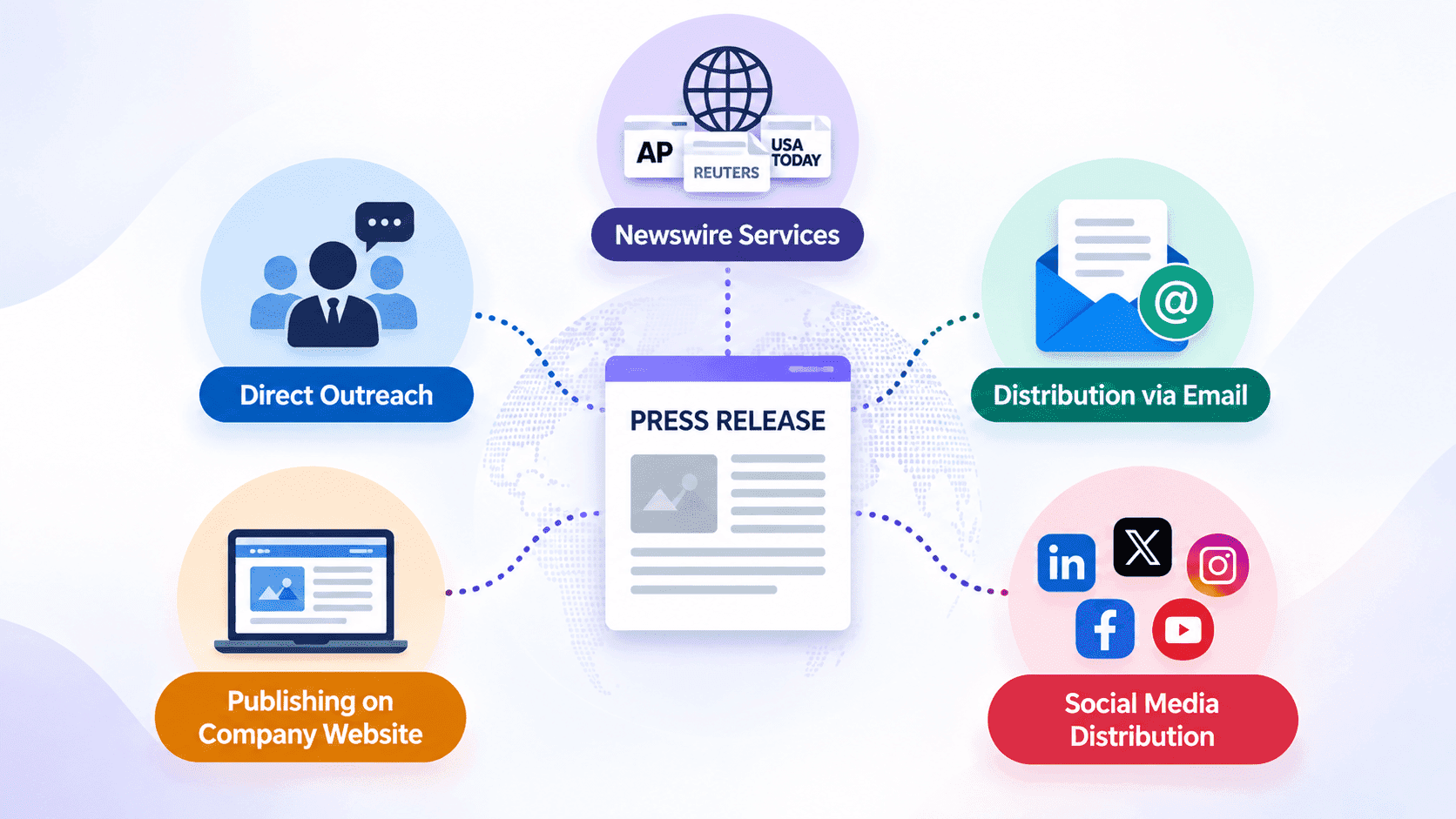
Once your press release is ready, the next step is understanding how press release distribution works.
FAQs:
How Long Should a Press Release Be?
There is no universal word count that makes a press release professional.
The better approach is to include everything the reader needs to understand the news and nothing that doesn't contribute to that purpose.
The goal isn't to hit an arbitrary word count. The goal is clarity.
Are the editorial guidelines the same for all news websites?
Most news websites have similar editorial guidelines, although some requirements may vary from one website to another. Press release distribution services generally provide their own editorial guidelines. Rocket PressWire's editorial guidelines can be viewed after logging in to the dashboard.
How can I distribute news-worthy content on media websites?
To distribute newsworthy content on media websites, you need to choose a distributer website like Rocket PressWire and then choose your suitable distribution options like single submission or package submission.







More Blogs
Keep learning with more blogs with latest insights, strategies, and PR ideas to take your business forward.